

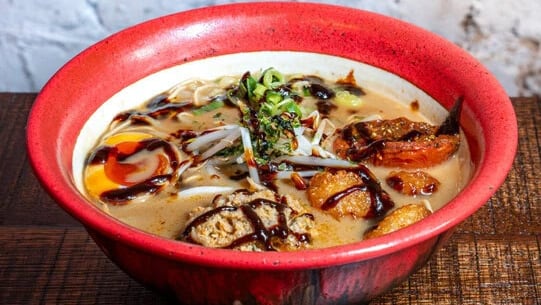
This summer, ramen-focused casual dining group Bone Daddies rolled out its breakfast menu across its estate following an apparently successful trial at its Victoria restaurant. Available from 10am, the menu is built around a breakfast ramen that is essentially the brand’s take on a full English, combining 20-hour pork bone broth with Cumberland sausage mince, Bloody Mary tomato, hash brown balls, spring onion and beansprouts, alongside HP tonkatsu sauce and noodles. The wider menu includes buldak tater tots, Japanese fried oyster mushroom bao and kinako French toast with matcha ice cream.
Fried chicken chain Popeyes is another brand that most would not associate with early-morning dining, yet it is also making a big play for the breakfast market. The brand expanded its morning menu across its UK estate earlier this year and extended service until 10.30am. The move followed a successful 2023 trial and saw the launch of around 20 items built around its chicken breakfast patties, including the Big Cajun Roll, Cajun Hash Brown and Egg and Cheese Muffin.
With prices starting at £1.50 and most breakfast burgers and wraps costing around £5, the menu is positioned to compete in the established quick-service breakfast market rather than operate as a niche extension of the Popeyes offer. Its availability through drive-thru, delivery and the brand’s app also gives Popeyes access to the different ways consumers buy breakfast.
The trend is not entirely new. Branded operators have been trying to enter the breakfast market for decades, with varying degrees of success. But the past 12 months have seen a growing number of established businesses trial breakfast, expand existing menus or make a more concerted push into the daypart.
Why breakfast, and why now?
The renewed interest comes as restaurant groups face growing pressure to generate more sales from their existing estates. For sites that would otherwise remain closed until lunch, breakfast offers the possibility of extending trading hours and creating an additional customer occasion.
Changing consumer habits have also broadened the opportunity. Breakfast is no longer confined to either a traditional fry-up or coffee and a pastry, with growing demand for portable, protein-rich and health-focused options giving operators more scope to create morning menus that fit their existing brands.
For QSR businesses, there is the additional advantage of infrastructure. Operators with established takeaway, delivery, drive-thru and digital-ordering channels already possess many of the capabilities needed to compete for morning trade.
The challenge is ensuring that the additional sales justify the labour, preparation and operating costs involved in opening earlier. Breakfast needs to attract new business rather than simply move existing lunchtime or brunch demand forward by a few hours.
Making breakfast fit the brand
Bone Daddies’ approach also highlights the importance of making a breakfast menu credible within the wider business. Rather than adding a conventional selection of eggs, bacon and pastries, the group has used familiar breakfast flavours to create dishes that remain recognisably Bone Daddies.
The group has also pointed to ramen’s place in Japanese food culture, where the dish is not necessarily confined to lunch or dinner. Breakfast therefore becomes an extension of the brand rather than a departure from it.
Salad bowl concept Atis is taking a similarly brand-led approach. Its phased breakfast rollout began at its St James’s restaurant and will move into further locations before reaching the group’s wider London estate in 2027. Each stage of the rollout is being accompanied by a launch on Deliveroo.
Its menu includes build-your-own yoghurt pots, overnight oats and Finnish rye toasts, keeping the offer closely aligned with the lighter, health-focused food customers already associate with Atis.
Co-founder Phil Honer has described the launch as part of an ambition for Atis to become the first thing customers think of across breakfast, lunch and dinner. In that context, breakfast forms part of a wider attempt to make the business relevant throughout the day.
Joe & The Juice is also targeting changing expectations around morning food. The brand has introduced a nine-strong range of hot breakfast items across 80 UK stores, including savoury wraps that can also be ordered as bowls. New sweet breakfast bowls have launched more widely across its international estate.
Built around protein, fibre and what the company describes as gut-friendly ingredients, the range is intended to cater to demand for more substantial and functional breakfast options. As with Atis, the menu draws on attributes already associated with the brand rather than attempting to recreate a traditional café breakfast.

A difficult daypart to crack
Yet breakfast is not necessarily an easy market to enter, even for large and well-established restaurant groups. Wagamama’s 2024 breakfast launch represented its second significant attempt to establish itself in the daypart. The group had first trialled breakfast at its Great Marlborough Street restaurant in 2015 and subsequently continued to offer it at its airport locations.
Its 2024 menu was introduced at 22 restaurants, with Wagamama saying a successful trial could lead to a national rollout. That wider launch does not appear to have followed.
The menu applied the Wagamama treatment to familiar breakfast and brunch formats, with dishes including chicken katsu waffles, morning baos, Japanese-style corn fritters, hash browns and açaí bowls.
Wagamama said at the time that it was responding to increased demand for all-day dining and brunch dishes. Its repeated experiments with breakfast nevertheless underline the difficulty of turning a trial into a meaningful, estate-wide offer.
Its experience also shows the importance of location. An airport restaurant serving travellers from the early hours has a very different opportunity from a high-street site that has traditionally opened at lunchtime.

Breakfast specialists
Dedicated breakfast and brunch operators approach the market from the opposite direction, having built the morning occasion into their businesses from the outset.
Farmer J incorporated breakfast relatively early in its development and continues to serve it at selected restaurants, allowing those locations to operate across a broader portion of the day.
Yolk also began with breakfast and brunch at the heart of its offer before expanding its focus into lunch, sandwiches and coffee.
As more mainstream restaurant groups move into the market, specialist operators will need to maintain a clear point of difference, while larger brands must demonstrate that their breakfast menus are more than convenient additions to their existing offers.
While not every brand will have the scale, demand or operating model to make the daypart work, these latest launches suggest more operators are seeing breakfast as a credible way to unlock another customer occasion – and another opportunity to make their estates work harder.